
Key Takeaways
An overload relay is a motor-protection device that detects sustained overcurrent — which may be caused by excessive mechanical load, a seized component, or a motor working harder than normal. When the current exceeds a set value for a certain length of time, the relay trips and tells the contactor to cut power to the motor, reducing the risk of heat build-up and winding damage. The overload relays commonly found in use come in both Thermal and Electronic types, which detect faults in different ways. When choosing one, you should consider the motor’s rated current, the load characteristics, the starting method and the other protective devices in the system together, so that operation is safe and well matched to the application.
Electric motors are essential devices in the electrical systems of factories, buildings and industrial machinery. During operation, however, a motor may be subjected to a greater-than-normal load, causing the current to rise continuously. Left too long, the temperature inside the motor can climb until the insulation or windings are damaged, shortening the equipment’s service life.
One device that helps reduce the risk of such events is the overload relay, usually installed together with a contactor in the motor-control circuit to watch for current above the set value and stop the motor when an abnormality is detected.
This article explains what an overload is, what an overload relay does, how it works, and how it differs from other types of electrical protection device — to help you choose equipment for your electrical system more appropriately.
What Is an Overload?
An overload is a condition in which an electrical device or circuit has to carry more than the level it was designed for, causing current to flow above the normal operating current for a period of time. This is especially relevant in electric-motor systems, where the mechanical load has a direct effect on the amount of current the motor draws.
For example, a motor driving a conveyor belt or machine may draw more current than usual when the machine is overloaded, when a shaft or moving part becomes stiff or jammed, when the mechanical load increases, or when the motor takes abnormally long to start.
When a motor runs in an overload condition, the higher current causes heat to build up in the windings. If the condition persists, the heat can accelerate the deterioration of the winding insulation, shorten the motor’s life, and in severe cases lead to equipment damage.
An overload therefore differs from a short circuit, which usually makes the current rise very quickly and severely over a short period, whereas an overload arises when a device or motor carries more than its normal load, allowing excess current to flow continuously for a time and building up heat until there is a risk of damage.
What Is an Overload Relay?
An overload relay is a protective device used to detect a motor’s sustained overcurrent. When the current rises above the set value and persists longer than the defined time, the relay trips and changes the state of its contacts in the control circuit, telling the contactor to disconnect power from the motor.
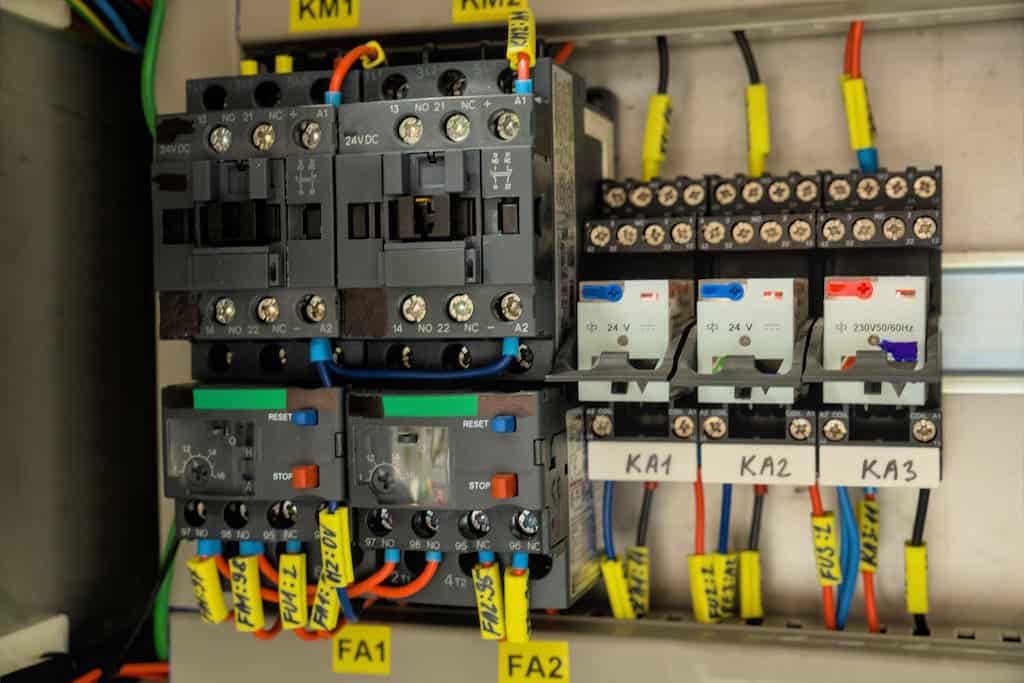
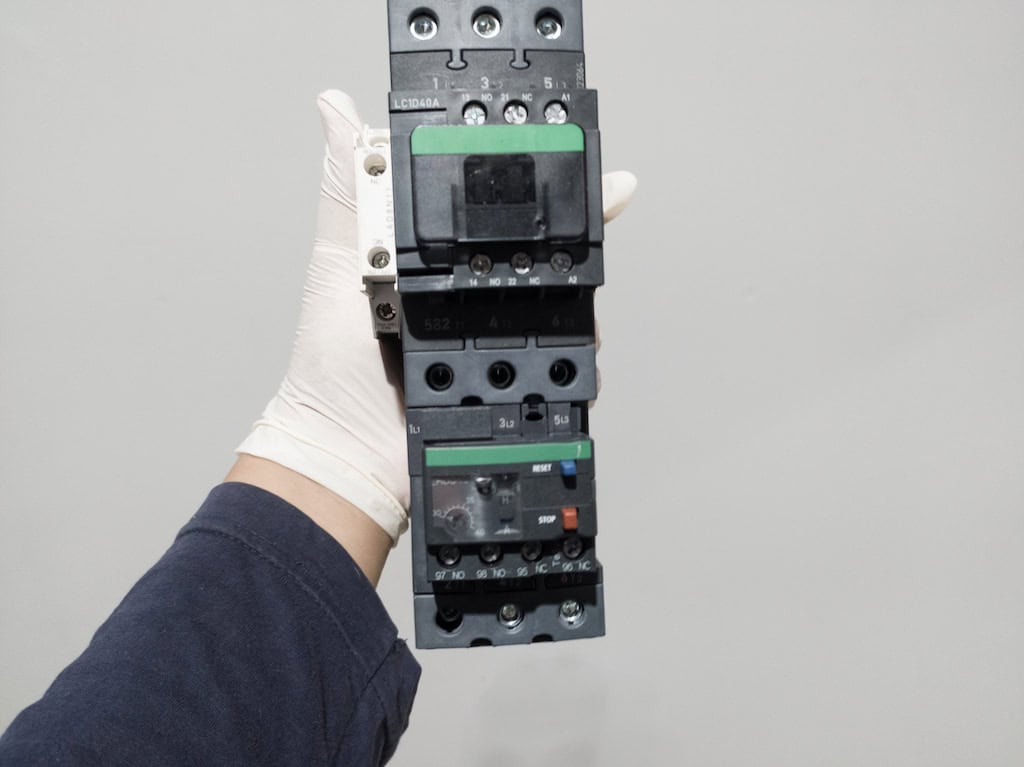
An overload relay usually works together with a contactor, the device that opens and closes the motor’s power-supply circuit. The overload relay monitors the motor’s operating condition; when it finds overcurrent at a level that could cause damage, its contacts change state, causing the contactor coil to drop out and disconnect the motor from the supply.
That said, an overload relay does not take the place of short-circuit protection devices such as a circuit breaker or fuse. A motor-control system should therefore be designed so that each type of device works together according to its proper function.
What Else Does an Overload Relay Do in an Electrical System?
Beyond its main role of protecting the motor from sustained overcurrent as described above, an overload relay plays several other important roles in an electrical system, as follows:
Reducing Damage from Abnormal Mechanical Loads
Motor problems do not come from the electrical system alone; they can also originate in the machinery — a jammed shaft, a belt running abnormally, stiff parts, or a machine carrying too heavy a load.
As the mechanical load increases, the motor needs more torque and current. If the condition continues, the overload relay detects the rising current and stops operation, reducing the chance of consequent damage to the motor.
Helping Detect Faults in the Motor System
Some overload relays detect more than just overcurrent; they can also respond to other faults such as phase loss, as well as current imbalance between phases, depending on the type and features of the device.
Reducing Downtime from Motor Damage
For a factory or production line, a motor that stops suddenly can affect many parts of the machinery and the production process. Protecting the motor before severe damage occurs reduces the chance of having to shut the equipment down for a long time to repair or replace the motor.
Having suitable protection in place therefore helps not only with safety but also with the continuity and efficiency of the system’s operation.
How Does an Overload Relay Work?
Although each type of overload relay detects and processes current in a different way, the basic principle is similar: monitor the motor’s current and command a trip when the current is found to be above the set level for long enough to put the equipment at risk.
The overload relays commonly found in use can be divided into two main types — the Thermal Overload Relay and the Electronic Overload Relay — each working as follows:
Thermal Overload Relay
The thermal overload relay is a widely used type. Inside it is a bimetal strip made of two metals that expand by different amounts when heated.
While the motor runs, current flows through the relay’s sensing element and generates heat. If the current is at a normal level, the heat produced is not enough to trip the relay; but when sustained overcurrent occurs, the heat rises until the bimetal strip bends.
When the bending reaches a set point, the internal mechanism changes the contact state. Typically the NC contact connected in the contactor control circuit opens, causing the contactor coil to drop out and the motor to be disconnected from the circuit.
Electronic Overload Relay
The electronic overload relay uses electronic circuitry or a microprocessor to measure current and assess the motor’s operating condition, instead of relying on a bimetal strip as the main heat-sensing element.
Its advantage is finer measurement and processing, as well as support for a wider range of protection settings in many models — such as selecting the current range, checking for phase loss, checking for current imbalance, or setting a trip class to suit the motor’s starting characteristics. It therefore suits systems that need more detailed motor control and protection, especially machinery or industrial systems with different operating conditions for each type.
Choose Electrical Equipment to Suit Your System for Greater Confidence
An overload relay is an important device that protects a motor from sustained overcurrent, which can lead to heat build-up and motor damage. But protecting an electrical system effectively means considering the whole system of equipment together — from the breaker, contactor and overload relay through to the cable, which must be able to handle the current and operating conditions appropriately.
For installations in buildings, factories or power-distribution systems that require standard-compliant low-voltage electrical wire, Teta Intertrade offers a wide range of electrical equipment and cable to choose from, including high-current CV cable for applications that need to handle electrical loads appropriately, together with advice on choosing the right cable size and type to match your system — adding confidence in performance, safety and long-term value.
Contact TETA INTERTRADE today to raise the safety and efficiency of the electrical installation on every one of your projects.
- LINE: https://lin.ee/NaG9WJP
- Phone: 02-068-9690 or 086-308-3741
Frequently Asked Questions About Overload Relays (FAQs)
What current setting should an overload relay use?
The current setting of an overload relay should be matched to the motor’s rated current and the equipment manufacturer’s recommendations. Check the information on the motor’s nameplate, together with the load characteristics and starting method. Do not set it too high simply to avoid frequent tripping, as this can leave the level of protection inadequate.
What should I do if the overload relay trips frequently?
Investigate the cause before resetting and restarting — for example, an excessive machine load, a stiff or jammed shaft or part, abnormal voltage, phase loss, or a relay current setting that does not match the motor. If the cause is still unknown, do not immediately increase the relay’s current setting.
Can an overload relay be reset?
In general an overload relay can be reset after it has tripped, but you should wait for the device and motor to return to a suitable condition first, and check the cause of the trip thoroughly. Some models support both manual reset and automatic reset, so check the manual for the model you are using.
How many years does an overload relay last?
In general, an overload relay lasts about 5–10 years if used under suitable conditions and maintained regularly. However, the actual service life depends on the number of trips, the environment, temperature, humidity, dust and the quality of installation. If it is used in a control cabinet with high temperatures or trips frequently, its condition should be checked and its operation tested periodically as part of the system’s maintenance plan.
Can one overload relay be used with motors of every size?
You should not use the same one for motors of every size, because each overload relay model has a different current range and protection characteristics. The choice should take into account the motor’s rated current, the load type, the starting method, and compatibility with the contactor or control equipment in the system.
References
- The Basics Of Selecting Overload Relays. Retrieved 11 September 2026. From ecmweb.com.
- Motor protection and overload relays for electrical crews. Retrieved 11 September 2026. From anvilfield.com.






