Key takeaways: Choosing an electrical conduit to suit the job and the environment is important for the safety and service life of an electrical system. Each type of conduit has different properties and suitability — both metallic and non-metallic. Installation should account for the conduit size, the number of wires, the material standard, and choosing fittings that match properly, to help protect the wires from impact, moisture, and external factors, while keeping the electrical system tidy and easy to maintain.
A safe electrical system does not depend on choosing the wire alone; it also includes protecting the wire from impact, moisture, dust, and the surrounding environment. Running wire in conduit is another step that protects wire from the outside environment and helps keep the wiring organized.
What Is Electrical Conduit, and Why Is It Important to the Electrical System?
Electrical conduit is tubing used as a channel to route and enclose the wiring in a system. It comes in metallic and non-metallic types, and its job is to reduce the risk from external factors that could damage the wire or its insulation. Its benefits include:
- Reducing physical damage: Helps protect against impact, crushing, and abrasion that could affect the wire’s insulation.
- Reducing problems from damaged wire: When the insulation is properly protected, it reduces the risk that could lead to a short circuit or leakage.
- Keeping wiring organized: Makes the installation orderly and convenient to inspect, maintain, or upgrade in the future.
How does running wire in conduit make a building safer?
Installing conduit properly reduces direct contact between the wire and moisture, dust, chemicals, or gnawing animals — especially in risk-prone areas such as industrial factories, commercial buildings, and outdoor areas exposed to sun or rain. Choosing suitable conduit and connectors also reduces gaps along the run, making it harder for foreign objects to get inside.
Popular Types of Electrical Conduit and Where Each Suits Installation
Conduit falls into two main groups — metallic conduit and non-metallic (plastic) conduit — and each differs in strength, flexibility, and ability to handle the environment, so choose one that matches the area and the installation type, as follows:
1. Electrical Metallic Tubing (EMT) — thin-wall metal conduit
EMT is made from galvanized steel sheet. It has a thin wall, is lightweight, and bends along the installation line fairly conveniently. However, because the wall is thin, its ends cannot be threaded.
Common uses: Exposed wiring runs, hidden above ceilings, or installed on interior walls. It should be used per the electrical code, avoiding installation that does not match the conduit’s properties — such as direct burial.
2. Intermediate Metal Conduit (IMC) — medium metal conduit
IMC has a thicker, stronger wall than EMT, so it handles impact better, and its ends can be threaded to connect securely to fittings.
Common uses: Outdoor work, embedding in walls, or areas with a chance of being knocked or hit.
3. Rigid Steel Conduit (RSC) — extra-thick metal conduit
RSC has a thick wall and very high strength, suited to heavy-duty work and areas with a high risk of mechanical impact. It can be used per the electrical code, including more demanding installations.
4. Flexible Metal Conduit (FMC) — flexible metal conduit
FMC is made from metal formed into a coiled structure, so it bends and adjusts to the area conveniently — suited to areas with installation constraints or where equipment moves.
Common uses: Connecting the electrical system to machines, motors, cabinets, or indoor equipment that vibrates; it helps reduce stress on the wire when equipment shifts.
5. Rain-tight Flexible Metal Conduit
This type has a basic structure similar to FMC but adds an outer jacket to reduce the ingress of water and moisture, so it suits areas that may contact water or outdoor weather.
Common uses: Connecting wire to outdoor machinery, or high-humidity areas that need installation flexibility.
6. PVC (Polyvinyl Chloride) conduit
PVC is a popular non-metallic conduit because it is lightweight, rust-free, and an electrical insulator, and it resists corrosion well — so it is used in many kinds of electrical work.
Common uses: Homes and general buildings, and wiring hidden in walls.
7. HDPE (High-Density Polyethylene) conduit
HDPE bends well and can bear compression, so it suits work installed outdoors or underground.
Common uses: Routing underground wire and cable, electrical systems for large projects, and external cabling — choosing the conduit type and properties to match each job’s requirements.
How to Choose an Electrical Conduit to Suit the Use
Choosing conduit should consider more than the material it is made from; look at the site conditions, the number of wires, and the environmental conditions together, to get conduit that supports the use well.
Consider the type of installation location
The site conditions are a key deciding factor. For example, a general home might use PVC for work hidden in walls, while an exposed run that needs a tidy look might use EMT. Factories, industrial areas, or car parks with a risk of impact might consider stronger metal conduit such as IMC or RSC, per the job’s requirements.
Choose a conduit size to suit the number of wires
Choose a size with enough room for the number and size of the wires. Do not pack the wires in too tightly, as that can make heat dissipation and installation difficult; allow spare capacity according to the fill guidelines for each type.
Check the standard and quality of the material
Choose conduit and accessories that pass industrial standards (TIS) or another reliable standard suited to the job, because quality material reduces the chance of cracking, breaking, or premature degradation, and adds long-term value.
What to Know Before Installing a Conduit System
Once you have chosen the type and size of conduit, the next step is to plan and install it properly, because the details during installation affect the tidiness and safety of the overall system.
- Plan the cable route before the actual install: Lay out the conduit route in advance on the plans, considering the positions of panels, points of use, and equipment so they relate to each other. Careful planning also reduces on-site rework, saves material, and makes the installation tidier.
- Choose fittings and accessories to match the conduit type: Fittings are important for joining each section of the run. If you choose accessories that do not match the type or size of the conduit, the joint may not be tight and gaps can form. Choose conduit fittings with a size and properties suited to each conduit type.
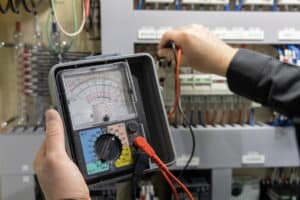
- Test before use: After installation, test the electrical system and the insulation resistance following the proper steps, to be sure the system is ready and to reduce the risk of electrical faults.
Choose Efficient Conduit and Fittings to Add Safety to the Electrical System
Since choosing the right conduit type for the site directly affects the safety and service life of the electrical system, the next step is to source standard-compliant, reliable equipment. If you are looking for a full-range electrical-equipment supplier that can advise professionally, TETA INTERTRADE is a partner ready to help you select equipment that makes your project as efficient as possible.
TETA INTERTRADE is a full-range electrical-equipment specialist, supplying and wholesaling high- and low-voltage equipment, wire and cable, insulators, safety equipment, earthing-system equipment, lightning-protection conductors, and many kinds of conduit and conduit fittings — selecting standard-compliant products at reasonable prices, with a team to advise on choosing equipment that matches your use, so installations are safe and support long-term use.
Contact TETA INTERTRADE today to raise the safety and efficiency of your electrical work.
- LINE: https://lin.ee/NaG9WJP
- Telephone: 02-068-9690 or 086-308-3741
Frequently Asked Questions About Electrical Conduit (FAQs)
Q: Which conduit is good for each type of use?
A: Choose based on the site, the environment, the level of protection needed, and the type of electrical system. For example, PVC conduit suits general work that needs to be lightweight and rust-free, while metal conduit suits areas that need more strength and impact resistance. Also consider the conduit size and standard to match the job.
Q: When should conduit be replaced or maintained?
A: Inspect it periodically, especially when you find cracks, rust, deformation, loose fittings, or impact damage. If you find anything abnormal, repair or replace the damaged part to prevent effects on the wire inside.
Q: What kind of conduit should be used for outdoor wiring?
A: Choose conduit suited to the outdoor environment, considering its ability to withstand sun, rain, humidity, impact, and corrosion, and choose fittings and accessories that help keep water or foreign objects out of the system.
Q: Can conduit be bent to follow the installation area?
A: Yes — with flexible conduit such as FMC, or with EMT and PVC using the proper bending tools, while more rigid types have limits. Choosing the suitable type from the start makes the work easier.
Q: Why must conduit fittings be matched to the type of conduit?
A: They act like the crucial connection points. If you choose the wrong type or size of fitting, the connection will not be tight, and gaps can let dust, moisture, or gnawing animals slip in. In contrast, choosing matched, standard-compliant fittings makes the joint seal tightly, stay strong, and keep full protection for the wire inside.