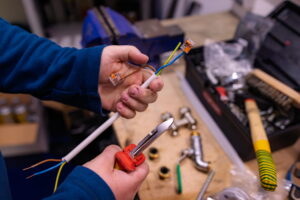
Key takeaways: Electrical tape comes in many types, each designed for different demands — heat resistance, moisture, chemicals, and specific environments. Understanding the types of electrical tape, the properties of each material, and how to choose and install them correctly improves insulation performance, reduces the risk of short circuits, and extends the service life of electrical systems — especially in industrial work and areas that face continuous high temperatures.
Popular Types of Heat-Resistant Electrical Tape in Engineering Work
There are several types of electrical tape, each designed for different environments and temperatures, so you should choose the one that matches the nature of the work, as follows:
1. Glass Cloth Tape — for work requiring high heat and high tensile strength
Glass cloth tape is made from woven glass fibers. Its strengths are durability, tear resistance, and good tensile strength, along with electrical-insulation properties suited to high-temperature areas. This type of tape is commonly used for wrapping motor windings, transformers, and insulating electrical systems inside industrial ovens — applications that need a material able to maintain performance even under continuous heat.
2. Polyimide (Kapton) Tape — thin insulation, very high heat resistance
Polyimide tape, widely known as “Kapton tape,” is a translucent amber tape with a thin film but highly effective electrical-insulation properties, with good resistance to heat and chemicals. Because the film is thin and precise to apply, it suits soldering work, assembling electronic circuit boards (PCBs), sensors, and electric-vehicle (EV) battery components.
3. Self-Amalgamating Rubber Tape — for waterproofing and wire joints
Self-amalgamating rubber tape differs from ordinary tape because it has no adhesive layer; it is made from Ethylene Propylene Rubber (EPR) that fuses to itself when stretched and wrapped over several layers, forming a dense, seamless insulation layer. Its key strength is good protection against water and moisture, making it suitable for wrapping high-voltage wire joints, underground cables, or outdoor connection points that need to keep water out of the electrical system.
4. PTFE (Teflon) Tape — for work facing heat and chemicals
PTFE (Polytetrafluoroethylene) tape stands out for its slippery surface, low coefficient of friction, and good resistance to high temperatures. It also resists corrosive chemicals such as acids and alkalis, making it suitable for wrapping wires in machinery or areas exposed to heat, chemicals, and abrasion during use.
5. Self-Fusing Silicone Tape — for outdoor work and high-heat points
Self-fusing silicone tape is made from high-quality silicone; when wrapped over itself it fuses into a single mass, increasing tightness and effectively preventing moisture. It also withstands heat, is highly flexible, and resists UV radiation. Thanks to its ability to handle high temperatures, its flexibility, and its UV resistance, it suits outdoor wire maintenance, high-heat piping, and emergency repairs in machine rooms, and it also helps reduce the risk of arc tracking in electrical systems.
Technical Specs: How Much Heat Can Each Tape Material Withstand?
A tape’s usability depends on the material it is made from and the type of adhesive. Each material supports a different temperature range, as shown in the table below:
| Type of electrical tape | Approx. operating temperature | Peak (short-term) temperature |
|---|---|---|
| Glass Cloth Tape | 130°C – 150°C | 200°C |
| Polyimide (Kapton) Tape | 180°C – 200°C | 260°C – 300°C |
| Self-Amalgamating Rubber Tape | 90°C | 130°C |
| PTFE Tape | 200°C – 260°C | 300°C |
| Self-Fusing Silicone Tape | 200°C | 260°C |
External factors that affect heat-resistance performance
However, choosing tape for real work should not look only at the maximum temperature; you should also consider other factors, such as:
- Moisture: can degrade the adhesive and reduce insulation performance.
- Chemicals: can corrode the tape material and cause cracking.
- Voltage: choose tape rated for the system’s voltage level to prevent leakage and electrical hazards.
Therefore, before choosing electrical tape, consider temperature, environment, and the nature of the use together, so the electrical system works safely and efficiently over the long term.
A Guide to Choosing Electrical Tape Safely
As mentioned, besides the material, the type of adhesive and the installation method directly affect the product’s performance and service life. The details are as follows:
How to choose the tape material and adhesive type to suit the job
Silicone adhesive
Silicone adhesive handles high temperatures well, is flexible, and usually leaves no sticky residue when removed. It suits work facing high heat, or areas where the tape must be removed later for inspection and maintenance.
Acrylic adhesive
Acrylic adhesive offers strong bonding and good resistance to UV and chemicals, suiting permanent installations or areas that need the tape to stay attached for a long time — though it may be more limited than silicone adhesive in environments with very high accumulated heat.
Techniques for wrapping tape at high-heat points so it doesn’t peel or melt
The installation method directly affects insulation performance and the tape’s service life, and should be done correctly, as follows:
- Prepare the surface before wrapping: clean the wire or workpiece until completely dry and free of oil, dust, or moisture, since such contaminants can reduce adhesion and make the tape peel off more easily.
- Wrap with a half-lap: overlap each turn by about half the tape’s width to build an even insulation layer, increasing tightness and better protecting against heat damage.
- Control the tension while wrapping: for fusing tapes such as self-amalgamating rubber tape or self-fusing silicone tape, stretch the tape slightly while wrapping so it seats tightly and fuses into one mass. However, do not stretch it too much, or the tape can deform, lose insulation performance, and let the ends peel off over time.
Choose Heat-Resistant Electrical Tape to Suit the Job — for a Safer Electrical System
Choosing the type of electrical tape that suits the work reduces the risk of insulation degradation, improves installation safety, and helps extend the service life of the electrical system — especially in industrial work that must handle heat and continuous use.
If you are looking for high-heat-resistant electrical tape for electrical and industrial work, TETA INTERTRADE offers a wide range of electrical tape products, with advice on choosing the right material for your job to improve the efficiency and safety of your wiring work.
Contact TETA INTERTRADE today to raise the safety and performance of the installations in every one of your projects.
- LINE: https://lin.ee/NaG9WJP
- Telephone: 02-068-9690 or 086-308-3741
Frequently Asked Questions About Types of Electrical Tape (FAQs)
Q: How many types of electrical tape are there, and what is each suited for?
A: There are many types. The ones popular for heat-resistant work include glass cloth tape, polyimide (Kapton) tape, self-amalgamating rubber tape, PTFE tape, and self-fusing silicone tape. Each has different properties, so choose one that fits the temperature, environment, and nature of the work.
Q: How do the properties of each type of electrical tape differ?
A: The main differences lie in the material, and its ability to withstand heat, moisture, chemicals, and voltage. For example, glass cloth tape suits motors and transformers; polyimide tape suits precision electronics; while self-amalgamating rubber tape and self-fusing silicone tape suit waterproofing and outdoor use.
Q: How much heat can electrical tape withstand?
A: It depends on the material. Generally, self-amalgamating rubber tape handles about 90°C, while glass cloth, PTFE, and polyimide tapes can handle roughly 200–260°C, or more for short periods. Always check the manufacturer’s specifications before use.
Q: Can heat-resistant electrical tape replace ordinary PVC tape?
A: In many cases, yes — especially for work facing high temperatures or harsher environments than ordinary PVC tape. However, choose the tape type to suit the job, since each type differs in heat resistance, insulation, and chemical resistance.
Q: When should electrical tape be replaced?
A: If the tape becomes brittle, peels, cracks, fades abnormally, or shows damage from heat or chemicals, replace it immediately, because degraded tape can reduce insulation performance and increase the risk of leakage, short circuits, and damage to the electrical system.