
Key Takeaways
Understanding the equipment that houses and connects wiring is a key factor in installing an electrical system that is safe and orderly. A junction box is the enclosure that holds wiring connections and is standard equipment in building and industrial work. Understanding its function, how it works, and how to choose the right type of electrical junction box helps keep your wiring organised, prevents the danger of short circuits, and effectively improves long-term safety in use.
Tangled, messy wiring is not just unpleasant to look at — it also hides the risk of a short circuit. When it comes to what lies behind a safe, standard-compliant electrical system, it is the proper management of connection points with an electrical junction box: a key device that acts as both a protective shield and a central hub for wiring. Whether you are a homeowner planning new wiring or simply interested in electrical work, knowing the function and types of junction box correctly helps you plan the installation and effectively prevent future sparking or current-leakage problems.
What Is a Junction Box, and Why Does It Matter in an Electrical System?
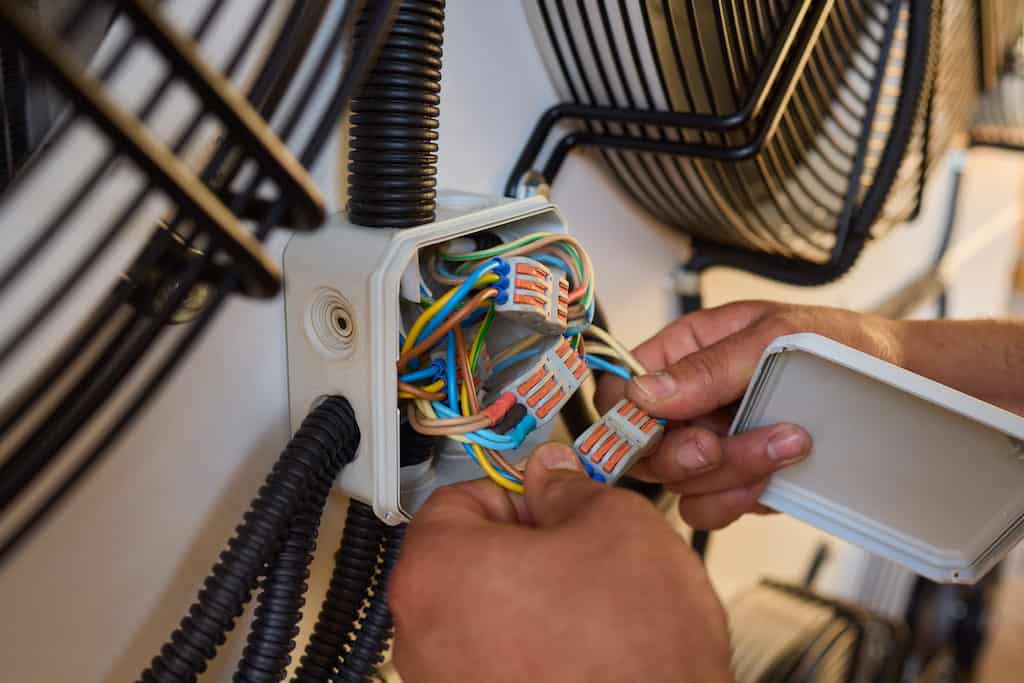
A junction box is an enclosure that serves as a central hub and covers the connection points where several wires meet. Its structure consists of the box body, a tight-fitting lid and conduit entry holes. It keeps wiring safely organised and uncluttered, and also makes maintenance convenient. It comes in several forms, such as the square box, a square-shaped box that accommodates connection or branch points in an installation.
What Does an Electrical Junction Box Do to Prevent Danger and Improve Safety?
The main role of an electrical junction box is not just to make an installation look neat — it is also a vitally important device for protecting the electrical system. Its main functions are:
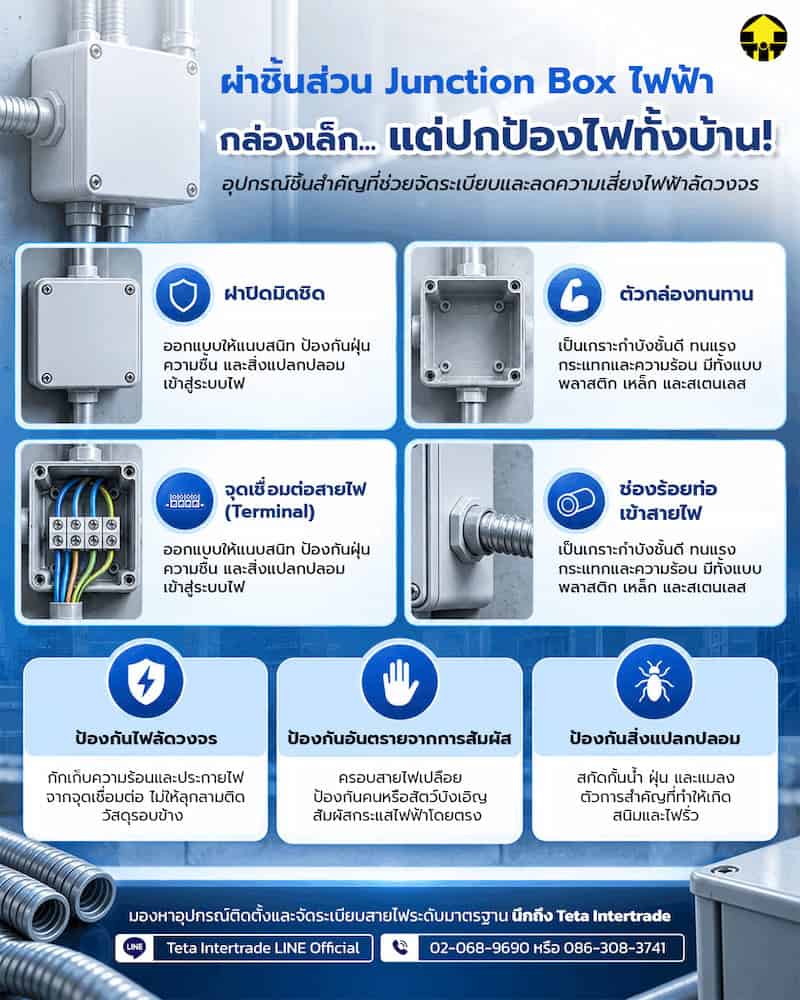
- Preventing short circuits: Contains sparks and heat from wiring connections so they cannot spread to surrounding flammable materials.
- Preventing contact hazards: Covers bare connection points to stop people or animals from touching live current directly.
- Keeping out foreign matter: Keeps dust, moisture and insects from damaging the connection points, which is a cause of rust and current leakage.
Types of Junction Box and Choosing One to Suit the Environment
To get the most out of a junction box, you need to consider mainly the material it is made of and the environment of the installation area, because each area has different risk factors.
- Plastic (PVC): Lightweight, rust-free and an electrical insulator; suitable for indoor work, dry areas, or hidden above a ceiling.
- Steel: Durable and resistant to impact and high heat; suitable for areas that need a high level of protection.
- Stainless steel: Corrosion-resistant and rust-free; suitable for humid areas, industrial factories, or sites near the sea.
- Waterproof type (IP65 and above): Has a rubber seal against water and dust; suitable for outdoor installation or spots directly exposed to rain and water spray.
The Difference Between Using a Junction Box in General Building Work vs. Industrial Work
The environment and purpose of the wiring determine the junction box specification. The clear differences can be summarised in this table:
| Usage aspect | General building work | Industrial work |
|---|---|---|
| Purpose | Emphasis on appearance, hiding the connection points | Emphasis on resistance to impact, heat and chemicals |
| Installation | Embedded in the wall or hidden above the ceiling | Surface-mounted for easy inspection |
| Box type | A small box that fits the conduit | A large box, wired via a terminal block to handle large amounts of current |
How to Install a Junction Box to Standard, and What You Should Know
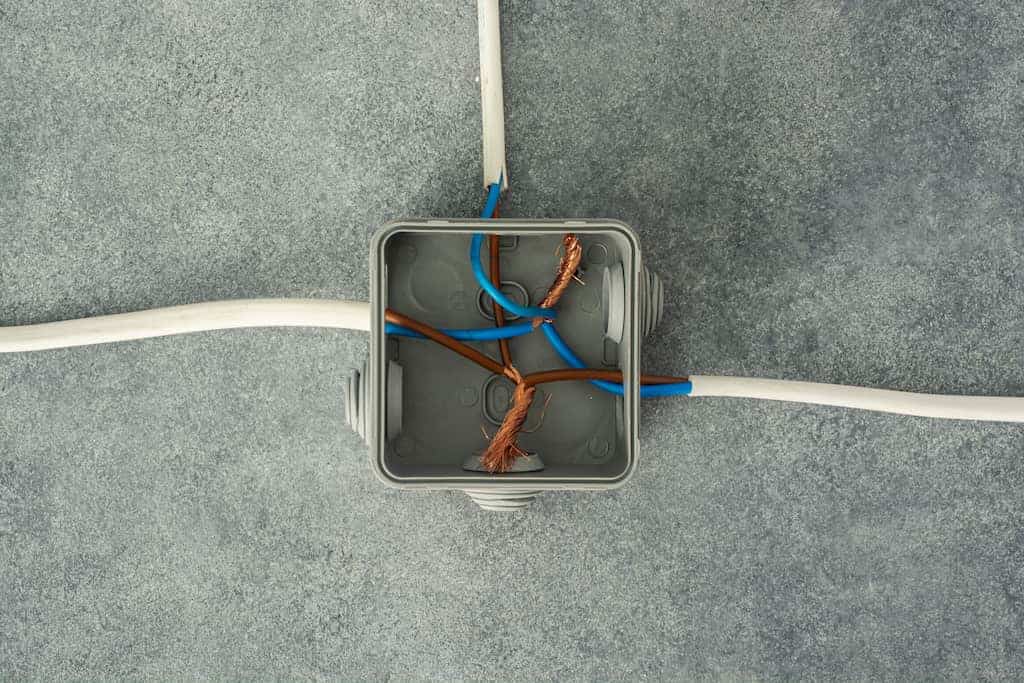
Good electrical installation starts with strictly following safety standards. Managing the wiring inside a junction box correctly greatly reduces the risk of accidents.
- Always switch off the power first: Always trip the main breaker or cut the circuit to prevent electric shock.
- Use standard-compliant connectors: Use a wire nut or a terminal block rather than just insulating tape, for a secure connection that prevents wires coming loose.
- Arrange the wires and close the lid properly: Lay the wires in gentle curves without sharp folds, and do not pack them too tightly, to reduce heat build-up; then screw the lid shut firmly.
Common Mistakes When Choosing an Electrical Junction Box, and How to Avoid Them
The main purpose of using a junction box in an electrical system is to keep wiring connections safe, but choosing or installing one incorrectly can create hazards, as follows:
- Use standard-compliant connectors: Use a wire nut or terminal block that matches the type, size and number of wires you need to connect, rather than just insulating tape, so the connection is secure and less likely to come loose.
- Overfilling: Packing in too many wires causes heat build-up that melts the insulation; choose a box size that leaves room for good heat dissipation.
- Forgetting to close the lid: Leaving the lid open lets dust, moisture and insects in until the system short-circuits, so always check and close the lid firmly after finishing the job.
Looking for Equipment to Install and Organise Wiring? Think of Teta Intertrade
Besides choosing a junction box to suit your electrical system, equipment for organising and connecting wiring also helps keep an installation tidy and easier to maintain — whether that is conduit fittings for joining conduit runs securely, or black cable ties for organising and securing wiring neatly inside or outside a control cabinet.
Teta Intertrade is ready to offer a complete range of equipment for electrical-system work, supporting the installation and management of wiring in all its forms safely and tidily. Choose equipment to suit your type of work and contact us for more details at:
- LINE: https://lin.ee/NaG9WJP
- Phone: 02-068-9690 or 086-308-3741
Frequently Asked Questions About Electrical Junction Boxes (FAQs)
What is the difference between a pull box and a junction box?
A pull box is designed for pulling wires or changing the direction of conduit runs over long distances, and generally has no wire connections made inside it. A junction box, on the other hand, is an enclosure designed specifically to house wiring and act as a connection or branch point.
How long does an electrical junction box last?
Its service life depends on the material and the installation environment. If you choose a suitable material and there are no severe external damaging factors — for example a steel box indoors or a waterproof box outdoors — it often lasts a long time, 10–20 years or more.
Can a junction box be installed in a sealed or hidden location?
It should not be installed in a sealed spot or buried in a solid wall that cannot be opened. Correct installation means positioning it where an electrician can always reach it, open the lid, and inspect or maintain it conveniently.
What should mainly be considered when choosing a junction box size?
Consider the number of wires, the cross-sectional size of the wires, and the type of connectors used inside the box, so there is enough free space for arranging the wires and dissipating heat, preventing heat-build-up problems.
What should I do if I find water or moisture trapped inside an electrical junction box?
Cut the power at the main breaker immediately, and never touch the box with bare hands while it is live. Then have a qualified electrician inspect it, wipe it clean and dry, and consider switching to a waterproof type of box to prevent future problems.
References
- A guide to calculating junction box size. Retrieved 11 September 2026. From changfi.com






