
Ground Rods — Factory Price, Certified to Electricity Authority Standards
for project work
The ground rod is a key component of the earthing system, responsible for safely discharging electrical current into the ground, helping reduce the risk of current leakage, electric shock, and damage to electrical equipment in buildings and industrial factories.
Ground Rod


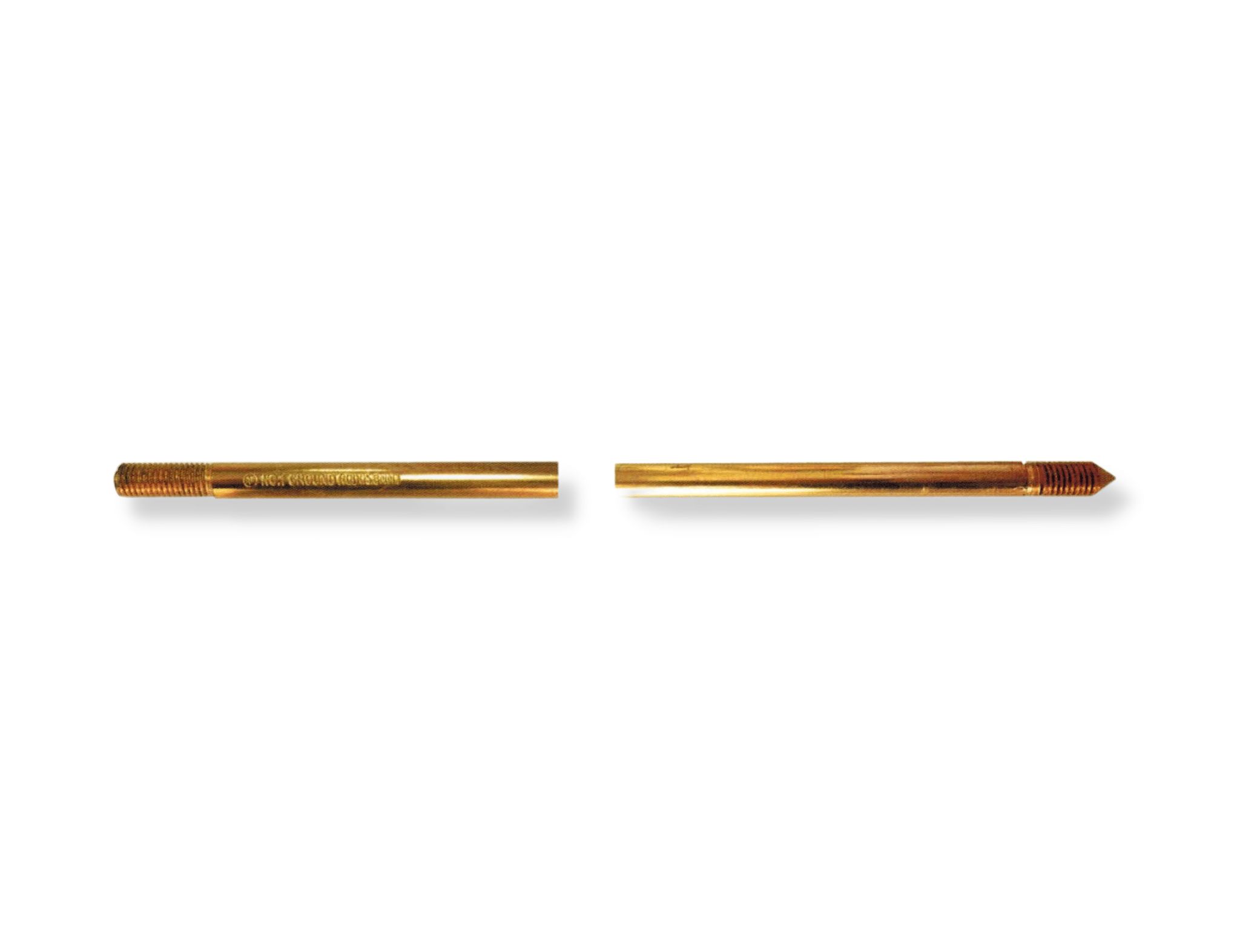


TETA INTERTRADE We have selected high-quality ground rods, made from materials meeting electricity authority standards — both solid copper ground rods and copper-bonded ground rods — that are strong, corrosion-resistant, and long-lasting, suitable for project work, construction, building electrical systems, and industrial factories of all sizes.
We sell ground rods at factory prices, supporting bulk orders, with a team of experts ready to advise on specifications and selection, so that your electrical grounding system is efficient, safe, and compliant with installation standards.
What is a Ground Rod?
A ground rod (Ground Rod), commonly known as a “grounding electrode”, is a cylindrical metal device designed to be driven or installed into the ground, acting as the intermediary that connects the electrical grounding system inside a building or factory directly to the earth.
Technically, the ground rod connects to the ground wire (Ground Wire) from the main electrical panel or control board, creating a low-resistance path for excess or leakage current to flow into the ground quickly. Popular materials include copper-bonded steel ground rods and solid copper ground rods, which offer different performance and service life depending on the site conditions.
Function and importance of the ground rod
Installing a standard-compliant ground rod is not just a legal requirement, but also the heart of the electrical safety system, with important roles including:
- Preventing current leakage and electric shock When a fault occurs, the current is discharged into the ground instead of flowing through the user.
- Overvoltage and surge protection (Surge Protection) Helps reduce damage from lightning or abnormal voltage.
- Maintaining electrical system stability Gives the system a stable voltage reference point (Ground Reference).
- Compliance with electricity authority requirements and building law which is necessary for work acceptance and permission to use the electrical system.
Popular types of ground rods
Ground rods used in building and industrial project work can be divided into 2 main types, according to their manufacturing and use, as follows:
Copper Bonded Ground Rod
Made from a high-quality steel core, coated with an extra-thick layer of pure copper, providing high conductivity and good corrosion resistance, suitable for work requiring stability and long service life.
Highlights
- Good conductivity, helping discharge current efficiently
- Resistant to rust and corrosion, long service life
- Meets electricity authority standards, suitable for projects and large-scale systems
Suitable applications
- Grounding systems in industrial factories
- High-rise buildings, office buildings, and large projects
- Work requiring low ground resistance and high safety
General Copper-Plated / Copper-Clad Steel Ground Rod
The copper-plated steel ground rod is a cost-effective option, made from a steel core plated or clad with copper at a thickness sufficient for general use in areas not at high risk of corrosion.
Highlights
- Economical price, suitable for work requiring large quantities
- Strong and easy to drive and install
- Sufficient for standard earthing-system use
Suitable applications
- General building work, residences, and warehouses
- Project work that needs to reduce costs while still meeting installation standards
- Basic grounding systems that do not require especially high durability
Ground rod standards to know before buying
When choosing a ground rod, you should consider the manufacturing standards and safety requirements, so that the earthing system is efficient and usable in the long term, including:
- International standard UL 467 : A standard accepted by electrical engineers worldwide, used to control the thickness of the copper layer and the strength of its adhesion, to ensure the copper layer does not peel off when driven into the ground.
- Requirements of EIT and the electricity authorities (MEA/PEA) : The electricity authorities in Thailand require ground rods to be at least 2.4 meters long and at least 5/8 inch (about 16 mm) in diameter, to provide sufficient ground contact area for discharging current.
- Copper Plating Thickness : For high-quality project work, you should choose a ground rod with an average accumulated copper-layer thickness of no less than 250 microns, to increase service life.
- Secure connection : A good standard is not only about the rod itself, but also about the connector or the exothermic welding, which must be strong so that the ground resistance is low and stable.
Buy high-quality ground rods from TETA INTERTRADE
For contractors, buyers, and project teams who need high-quality ground rods, electricity-authority standard, at wholesale prices TETA INTERTRADE We have a full range of products to choose from, both solid copper ground rods and copper-bonded ground rods, meeting electricity authority standards (TIS) and international standards, ready to support all types of electrical installation work, whether building work, factory work, or large-scale earthing systems.
We have factory-priced ground rods that offer great value, with nationwide delivery service and a professional team ready to advise on selecting products suitable for your site, helping you be confident that your electrical grounding installation will have the highest safety.
For product details, promotions, or to place an order, contact us at
- LINE : https://lin.ee/NaG9WJP
- Telephone: 02-068-9690 or 086-308-3741
Frequently Asked Questions about Ground Rods (FAQs)
How deep should a ground rod be installed to achieve appropriate ground resistance?
Generally, the ground rod should be installed fully buried to its entire length (at least 2.4 meters) and placed in a location with suitable soil moisture, to help reduce the ground resistance to meet electricity authority standards.
If the ground resistance does not meet the standard, how can it be corrected?
You can add more ground rods, connect ground rods in parallel, or use ground enhancement material to help reduce the ground resistance without replacing the entire system.
Is a single ground rod enough for a large project?
For large buildings or factories, more than one ground rod is usually required, connected into a common grounding system, so that current discharge is efficient and consistent throughout the system.
How often should the ground rod system be inspected or maintained?
It is recommended to check the ground resistance at least once a year, or whenever the electrical system is modified, to ensure the grounding system still operates safely.
If interested in ordering solid copper ground rods and copper-bonded ground rods at wholesale prices, which channel should be contacted?
If you want to buy solid copper ground rods and copper-bonded ground rods at wholesale prices, you can contact us for special prices and a quotation via LINE: https://lin.ee/NaG9WJP or by telephone: 02-068-9690 or 086-308-3741